BuddyGoal
Blog
Stop stressing about protein
How much protein do you need to build muscle? Research says about 1.6 g per kg is enough. Training and enough calories matter more.
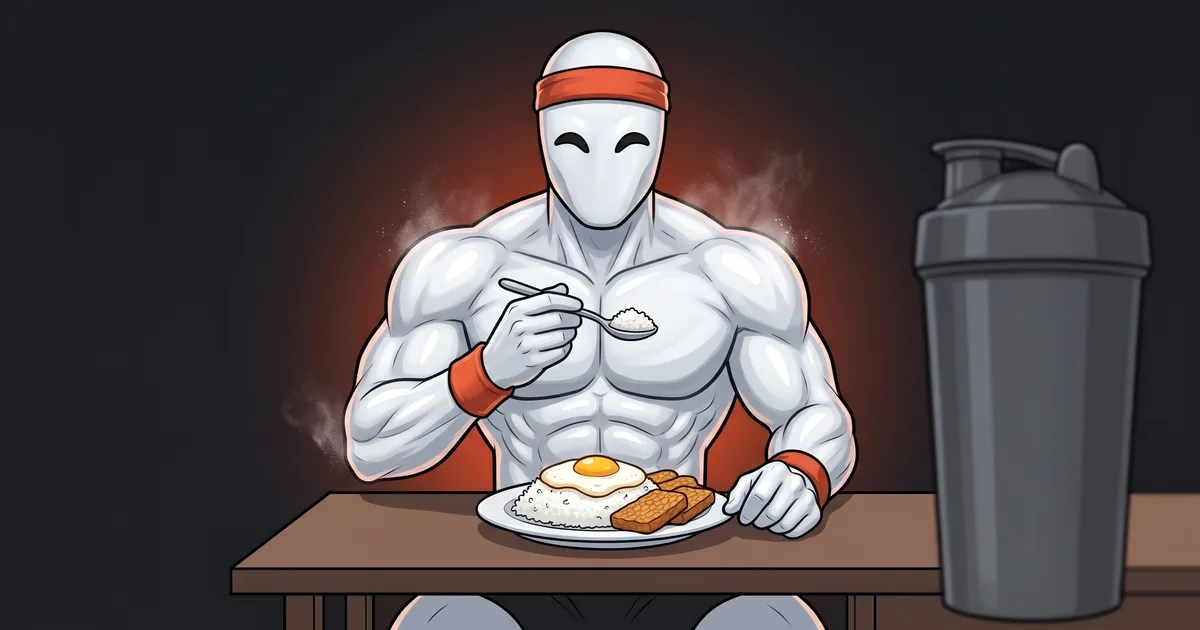
If you train regularly and eat enough calories, your muscles will grow. Protein helps, but less than it’s usually made out to, and the benefit tops out at around 1.6 grams per kg of body weight a day. You don’t need to chase 2 to 3 g/kg, and shakes are optional.
How protein got this big
Open any fitness feed. Protein targets in the hundreds of grams, a shake after every session, fear of losing muscle after one low-protein day. A lot of those numbers come from competitive bodybuilding habits or supplement brands, not from what someone new to the gym needs.
The result: plenty of people get stressed about protein before their training is even consistent. That’s the wrong way round.
What the research says
One of the biggest summaries on this is a meta-analysis by Morton and colleagues (2018) in the British Journal of Sports Medicine. It pooled 49 studies with 1,863 people doing resistance training.
What they found:
- Extra protein does add muscle, but on average only about 0.3 kg over a training program. Most of the gain comes from the training.
- Above a total intake of about 1.6 g of protein per kg of body weight a day, more protein added no more muscle. The upper end of their estimate was about 2.2 g/kg, so 1.6 g/kg is a safe figure for most people.
- The effect was smaller in people who weren’t trained yet. If you’re just starting, showing up consistently matters far more than a precise protein number.
The International Society of Sports Nutrition’s position stand (2017) lands in the same place: 1.4 to 2.0 g/kg a day is enough for most people who exercise.
So how much?
A simple rule: about 1.6 g per kg of body weight a day.
| Body weight | About this much protein a day |
|---|---|
| 55 kg | about 90 g |
| 65 kg | about 105 g |
| 75 kg | about 120 g |
And ordinary food gets you there:
| Food | About |
|---|---|
| Egg, 1 | 6 g |
| Tempeh, 100 g | 19 g |
| Tofu, 100 g | 8 g |
| Chicken breast, 100 g | 31 g |
| Fish, 100 g | 20 g |
| Milk, 1 glass (250 ml) | 8 g |
| White rice, 1 plate | 5 g |
A sample day: 2 eggs at breakfast, rice with 100 g of chicken at lunch, tempeh and tofu at dinner, a glass of milk. That’s roughly 80 to 90 g with no shake at all. A shake is convenient, not required.
If you’re 20 g short today, you haven’t lost anything. What counts is your weekly average, not one day.
If your body fat is on the higher side
First, one misconception to clear up: body fat is stored energy, not stored protein. Your body can’t build muscle out of fat, so you still need protein.
But two things let you relax a lot.
Use your goal weight, not your current weight
Per-kg targets assume most of your weight is muscle and organs. If you weigh 90 kg and a good part of that is fat, 1.6 × 90 = 144 g is more than you need. Use the weight you’re aiming for, say 70 kg, which gives about 110 g. More realistic, and easier to hit.
You can build muscle while losing fat
This is called body recomposition. A review by Barakat and colleagues (2020) notes it shows up most often in people who are new to training and still have a fair amount of body fat. When you eat a little under maintenance, the energy gap is covered by fat, while resistance training tells your muscles to grow. No need to bulk first and cut later.
One note: while you’re in a calorie deficit, protein matters a bit more for holding on to muscle. A study by Longland and colleagues (2016) found that people in a deficit doing hard training on higher protein lost more fat and gained more lean mass. So when cutting, don’t let protein drop far below your target. A sensible target, not an extreme one.
What matters more than protein
If you can only focus on a few things, roughly in this order:
- Consistent resistance training that slowly gets heavier.
- Calories that match your goal (see Calorie is all you need).
- Enough protein, mostly from normal food.
- Enough sleep.
Protein is on the list, just not at number one.
When to be more careful
- Older adults: they tend to need more protein for the same result.
- Kidney disease or other medical conditions: talk to a doctor before raising protein.
- Athletes dieting hard for a competition: their needs are different, and they usually have a coach.
Sources
- Morton RW et al. (2018). A systematic review, meta-analysis and meta-regression of the effect of protein supplementation on resistance training-induced gains in muscle mass and strength in healthy adults. British Journal of Sports Medicine.
- Jäger R et al. (2017). International Society of Sports Nutrition Position Stand: protein and exercise. Journal of the International Society of Sports Nutrition.
- Barakat C et al. (2020). Body recomposition: can trained individuals build muscle and lose fat at the same time? Strength and Conditioning Journal.
- Longland TM et al. (2016). Higher compared with lower dietary protein during an energy deficit combined with intense exercise promotes greater lean mass gain and fat mass loss. American Journal of Clinical Nutrition.
In BuddyGoal, ask Coach Budi “Is my protein enough?”. He looks at your average over the days you logged in full, not just today.